IWE AI Infra: Engineering Sustainable, Gigawatt-Scale AI Data Centers
Latest news: Gujarat MoU, AI Data Center Site Selection, VG Summit
For next-generation AI compute, IWE AI Infra delivers a systems engineering approach to siting, sizing, power, cooling, water, and resilience.
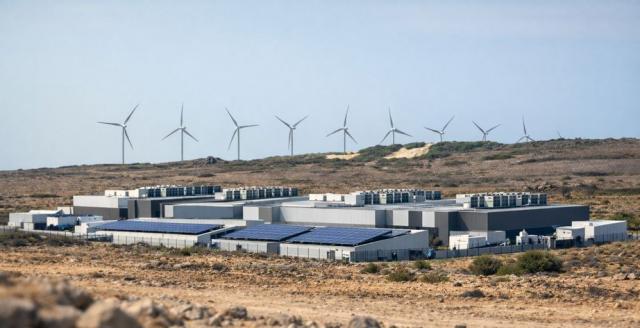
The explosion of large language model (LLM)–based artificial intelligence has created an unprecedented surge in the demand for compute infrastructure, leading to the rapid development of giga-watt-scale AI data centers. As part of IWE AI Infra’s ongoing assignment, sustainability has been established as a foundational pillar of design—ensuring that the environmental footprint of these facilities remains as low as possible even as their computational footprint grows exponentially.
The following sustainability design principles guide all design and procurement decisions:
- Minimize the carbon footprint of electricity generation used to power the data center
- Target: Achieve an annualized carbon intensity of ≤ 50 g CO₂e/kWh, through a mix of renewable power purchase agreements (PPAs), on-site solar + battery energy storage systems (BESS), and participation in 24×7 carbon-free energy matching programs.
- Metric: Annual Scope 2 emissions (tCO₂e), measured as the weighted average of hourly energy consumption × marginal grid emission factor.
- Energy-efficient cooling with heat recovery
- Target: Achieve Power Usage Effectiveness (PUE) ≤ 1.15 for GPU-dense AI halls (> 80 kW/rack), with Cooling System Effectiveness (CSE) > 0.85.
- Metric: Fraction of waste heat recovered for reuse in district heating or absorption chilling ≥ 25%.
- Deploy demand response to minimize grid stress during peak hours
- Target: Design facility load flexibility of ≥ 10% curtailable capacity (e.g., temporary throttling of non-critical training jobs, shifting inference to off-peak hours).
- Metric: Annual hours of grid demand response participation; MW curtailed per event.
- Minimize use of high-GHG refrigerants and chemicals
- Target: Eliminate refrigerants with Global Warming Potential (GWP) > 10; preference for low-GWP refrigerants such as R-1234ze(E) or CO₂ (R-744).
- Metric: Total refrigerant charge (kg) × GWP < 100 tCO₂e equivalent per data hall.
- Minimize water consumption
- Target: Achieve Water Usage Effectiveness (WUE) ≤ 0.10 L/kWh through air-cooled or liquid-cooled closed-loop systems, avoiding evaporative towers.
- Metric: Annual water draw per MWh of IT load.
IWE has developed a Design Decision Framework linking each principle to engineering measures—like use of direct-to-chip liquid cooling, chilled-water recovery loops, renewable PPAs, and grid-interactive controls.
IWE uses a multicriteria methodology to identify the optimal location of data centers. The primary criterion is cost of electricity, which combines cost of wind, solar, BESS, and carbon credits to offset electricity that is sourced from the grid. Other criteria include digital connectivity (Fiber, latency, CLS distance, redundancy), cooling feasibility, land availability and constraints (hazards like flood, seismic activity), logistics and infrastructure (cost of logistics), and environmental and social impacts.
IWE provides technical assistance in choosing the right mix of electricity sources and choosing water efficient technologies for cooling AI data centers.
IWE is working with the State of Gujarat on this project.
For more information, contact us
IWE AI Infra operates as a specialized division of Innovative Wind Energy, Inc. (IWE)